

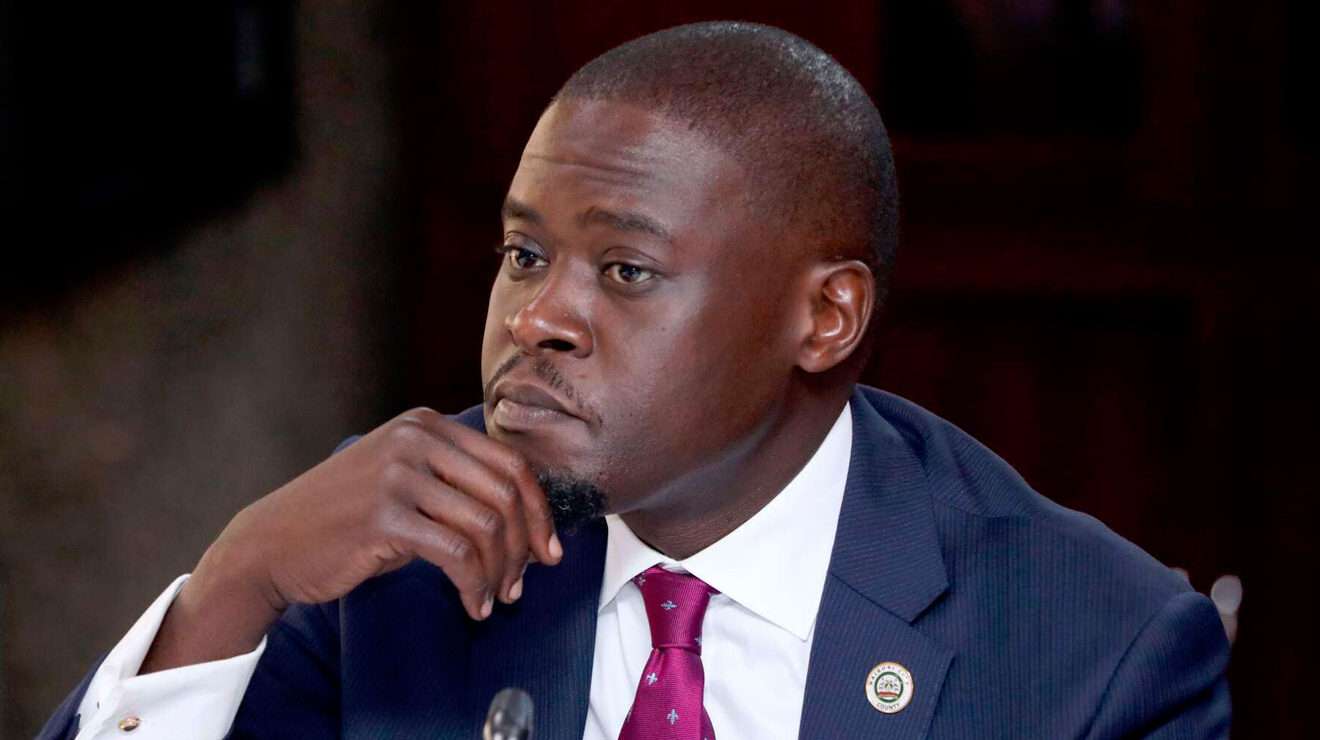
Nairobi Governor Johnson Sakaja has dismissed claims that the county is planning to hand over key functions to the national government.
In an interview with NTV on Wednesday, Sakaja said such a move would repeat the “disastrous” experience of the defunct Nairobi Metropolitan Services (NMS).
He maintained there were no plans to sign off any county functions to the national government, insisting that his administration retains full control over Nairobi’s affairs.
“Absolutely not. There are no functions that are going to be transferred to the national government,” Sakaja said.
“The last time that happened during the previous regime, it ended up disastrously.”
He recalled that when the NMS was created under Article 187 of the Constitution, the agency left behind a pending bill of Sh16 billion in just two years, despite receiving budget allocations from both the county and national governments.
“You can imagine that in two years, NMS left us a pending bill of Sh16 billion. And yet, the County Assembly had appropriated Sh27 billion to the same entity, and the National Assembly also appropriated money,” he said.
According to Sakaja, while the NMS completed some projects such as walkways and health facilities, many remained unfinished, and several contractors were left unpaid.
According to Sakaja, while the NMS completed some projects such as walkways and health facilities, many remained unfinished, and several contractors were left unpaid.
“It’s really unfair. People took out loans to do work, but they were never paid,” he noted.
The governor maintained that any ongoing discussions with the national government are about collaboration, not the transfer of power.
“What the city requires is what is provided for in the Urban Areas and Cities Act. Section 6 talks about collaboration,” Sakaja said.
“Because Nairobi is also the capital city, a diplomatic hub, there are areas where collaboration is necessary.”
He explained that the county has actually taken on more roles than before, citing the school feeding programme initiated jointly with the Ministry of Education.
“We have done an intergovernmental agreement to provide meals in schools. That naturally would have been a role of the national government,” he said.
The governor defended his administration’s handling of urban services, saying Nairobi’s challenges, such as waste management, lighting, and cleanliness, require joint efforts with national agencies, not takeovers.
“The biggest issue had been manpower. The last time environmental staff were hired was in 1987,” Sakaja said.
The governor stated that any partnership with the national government must be based on mutual support, not control.
“Either see me signing or not. There’s no such plan,” Sakaja said.