

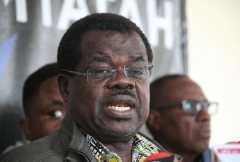
Busia Senator Okiya Omtatah
By Njoroge David
President William Ruto’s Nyota youth fund has stirred fresh political divisions, with Busia Senator Okiya Omtatah accusing the government of breaching fiscal rules and centralising power.
Omtatah argued the Sh50,000-per-youth grant programme risks turning into an “odious debt” that could burden taxpayers for years.
He warned that the government is using foreign loans under the guise of empowerment, calling it “a dangerous return to the era of imperial presidency.”
“The Executive is consolidating power through fiscal instruments that sidestep Parliament,” observed Omtatah, noting that the National Treasury had not disclosed clear financing details for the first phase.
The Nyota Fund, officially known as the National Youth Opportunities Towards Advancement Project, is a World Bank-financed initiative launched by President Ruto to tackle youth unemployment. It targets 100,000 young Kenyans with Sh50,000 grants each after short training sessions, selecting 70 youth from each of the country’s 1,450 wards.
According to the Interior Ministry, the programme builds on the Kenya Youth Employment Opportunities Project and aims to benefit more than 820,000 young people nationwide.
However, more than nine million Hustler Fund defaulters have been locked out unless they clear their debts, a move critics say undermines inclusivity and penalises the poorest youth.
Omtatah insisted the fund’s design and rollout lacked transparency.
“You cannot claim to empower the youth while mortgaging their future with opaque borrowing,” he noted, urging Parliament to review the legality of the funding arrangements.
Budget documents show the Treasury faces a Sh7.6 billion shortfall, raising questions about how the first phase will be financed despite the World Bank’s Sh13.6 billion commitment.
The Nyota Fund differs from the Hustler Fund, which offered instant mobile loans without paperwork. While Nyota promises structured training and grants, critics argue it mirrors past initiatives and lacks innovation.
Supporters within the government defend the project as a step toward sustainable youth empowerment.
A senior Treasury official, speaking on condition of anonymity, said the fund will “channel resources directly to communities and stimulate job creation.”
Omtatah dismissed those assurances, saying fiscal discipline must not be sacrificed for political expediency.
“Kenya cannot continue piling debt in the name of empowerment,” he added.