

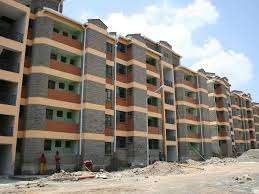
Affordable Housing in Kenya
By Times Reporter
Kenya’s housing deficit of 150,000 units a year has prompted a partnership between property developers and the national business lobby to push financing and policy reforms.
The Kenya Property Developers Association (KPDA) said it will use its members’ technical expertise and on‑the‑ground experience to work with the Kenya National Chamber of Commerce and Industry’s (KNCCI) national network to advocate for streamlined approval processes, consistent policies and a stable investment climate.
“From streamlining approval processes, advocating for consistent policies and creating a stable environment that attracts investment, we will move from fragmented requests to coordinated advocacy,” said KPDA Chairman Ken Luusa.
KNCCI President Eric Rutto said the real estate sector contributes about 10 per cent of Kenya’s gross domestic product and is among the fastest‑growing industries.
He noted that 22 per cent of Kenyans live in urban areas, with the urban population growing at 4.2 per cent annually.
“Increased construction activity can become an important source of revenue through processing permits, approvals and related activities,” said Rutto.
“Affordable housing remains a key government priority under the Kenya Vision 2030 and the Big Four Agenda,” he added.
Kenya requires about 200,000 new housing units each year but produces only 50,000, creating a shortfall that has doubled housing prices since 2004.
The government has identified affordable housing as a driver of job creation, with each unit built creating between three and five jobs.
The partnership also seeks to address demand for retail, office and industrial space, driven by urban growth, e‑commerce and infrastructure projects such as the Standard Gauge Railway and Nairobi Expressway.